

Unlike people, not all debt is created equal.
A few days ago the United States passed forty trillion dollars in national debt, and that’s just the tip of the iceberg. American households are carrying another $18.8 trillion in mortgages, car loans, credit cards, and student debt. That doesn’t include the corporate debt or leveraged securities stacked on top of it. It doesn’t count the whole liability of the American economy.
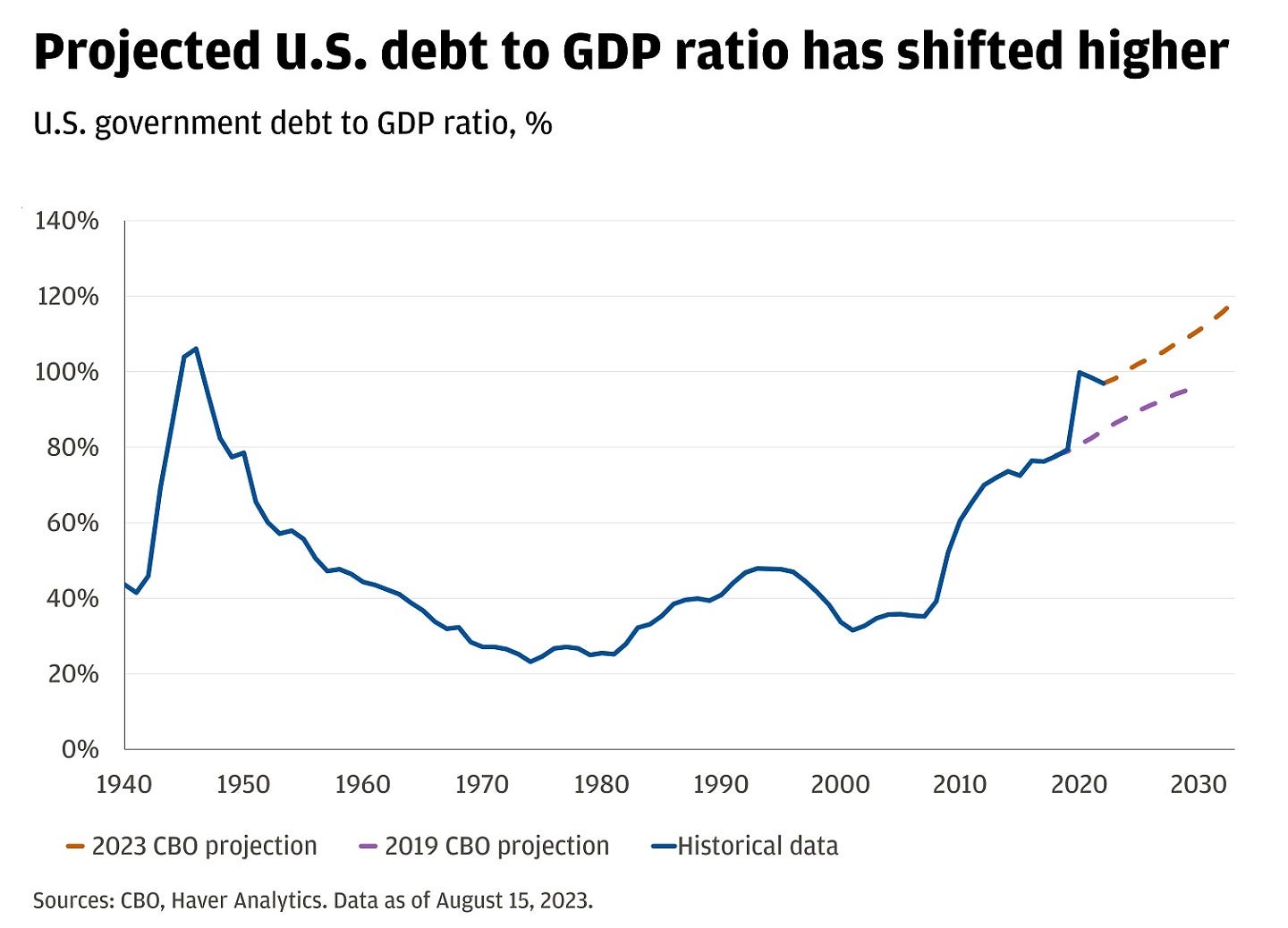
It’s not the first time we’ve owed money like this. From the 1930s into the early 1950s we ran enormous debts and deficits. We called it the Arsenal of Democracy, and we borrowed to build the planes, tanks, and equipment that won the Second World War. By 1946 the federal debt hit 106 percent of GDP, which is still the all-time record. We were spending far more than we brought in, year after year, on purpose.
Sometimes debt is an investment in the future, and sometimes debt is an extraction. The debt we’re carrying now is the second kind. It’s borrowed from what we built in the past, from the very things we’ve been selling off for forty years.
A Fight Worth Having is trying to raise $100,000 before the end of the month so that we can do more provide more support to these newly elected progressives. We’d love your help. You can see our progress here.
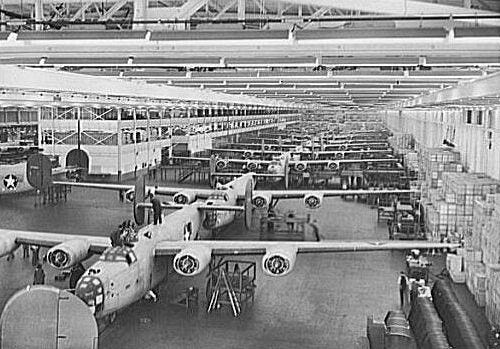
From roughly 1930 to 1953, the debt built dams like the TVA’s. It built rural electrification. In 1936, nearly nine out of ten American farms had no electric power; by the early fifties the lights were on almost everywhere, including here in the Southeast. Borrowed public money literally turned the lights on for a generation of people. It built factories, paid for by the American people, and laid out with help from the Army Corps of Engineers. At Willow Run in Michigan, Ford Motor Company used money from the Arsenal of Democracy to turn a stretch of farmland into the largest factory on earth. By 1944 that plant was rolling a B-24 bomber out the door every 63 minutes. Field-to-factory in about two years, a speed that seemed impossible, but we did it anyway.
After the war we kept going. The Hill-Burton Act of 1946 built hospitals in communities that had none. When it passed, roughly forty percent of American counties had no hospital at all; by 1975 nearly a third of the hospitals in this country had been built with Hill-Burton money, and they were required to treat people who couldn’t pay. The GI Bill sent a generation of veterans to school. The interstate highway system laid down more than forty thousand miles of road, and every dollar we spent on it returned about $1.80 in economic output.
That was productive debt. It was factories, infrastructure, water, electricity, power generation and distribution, hospitals, highways. It built America. And then we used the industry we’d built with public money to grow our way out. The debt went from 106% of GDP in 1946 down to 23% by 1974, and we didn’t get there by discovering a magical love of penny-pinching. We got there by building.
Then, starting around the 1980s, we started offshoring our means of production, handing our factories to China and anybody else who’d take them. The gospel of free-markets and neoliberalism. We gave tax breaks to corporations over and over, from a top marginal rate of about ninety percent down to the high thirties today. We still cap Social Security taxes for high earners, so people make money off of money contribute nothing at all.
This era of deficits bought wars and a bank bailout that put trillions on the balance sheet. We gave the folks who caused the crash bonuses instead of jail time.
It also bought things worth defending: Social Security has kept our seniors from going hungry. Medicare and Medicaid keep tens of millions of people alive. This year the federal government will spend $7.4 trillion on these three social programs. They sit at the center of the budget because aging, sickness, and care sit at the center of real life. I’ve got no quarrel with the programs.
My quarrel is that we keep dumping more and more into broken economic systems. The wealthy take theirs off the top and leave the rest of us fighting over scraps. In reality, a lot of Medicare and Medicaid is diverted into corporate pockets, because our health care system is built to extract instead of heal. It uses our money against us by consolidating, closing hospitals, and telling whole communities they aren’t profitable enough to deserve a hospital. Or a birthing center.
The money that does reach people who need it, still can’t keep them afloat. Social Security hands our seniors a check and turns them loose in an economy built to squeeze every dollar out of them, through housing costs, food costs, and corporate price hikes. None of this money is going into nest eggs. Nobody’s stuffing a mattress with cash. People use it to survive, and barely, hand to mouth.
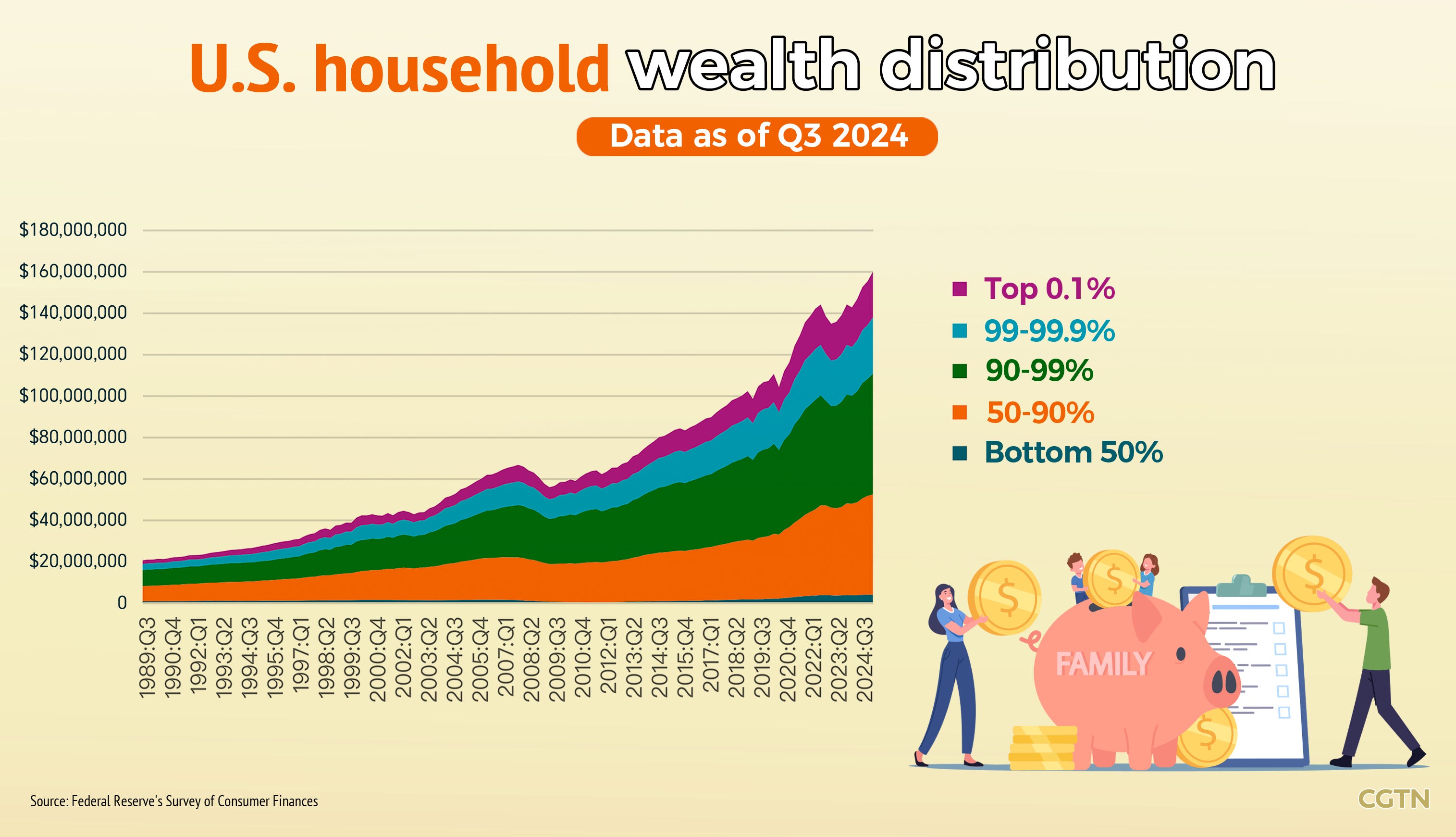
So where’s it all going? The 40 trillion isn’t in the pantries and refrigerators of our grandparents. The bottom half of Americans hold about 2.5% of this country’s wealth. The top ten percent hold 68%.
National health spending will hit $5.7 trillion this year and $9 trillion by 2034. Carry that forward ten years and it will cost around $80 trillion, with government sponsoring roughly half of it.
Eighty trillion dollars, and we still live in a country where hospitals disappear the minute they stop making money for the suits that own them. One in three U.S. counties is a maternity care desert, and more than half don’t have a single hospital that delivers babies, which touches nearly 370,000 births a year. Nearly 47 million of us live an hour or more from a Level I or II trauma center. We spend more on health care than any nation that has ever existed and whole regions of the country can’t get a baby delivered or a trauma treated close to home.
We let an out-of-control health industry fleece us. And it’s not just the insurers, though they’re a big part of it. It’s the providers too, charging hundreds of thousands of dollars for operations that cost less than half that overseas, fifteen dollars for a band-aid, five dollars for a single aspirin. We spend $13,432 per person per year on health care, close to double what comparable wealthy countries spend, and more than a thousand of those dollars go to administration alone, several times what anybody else pays. That’s billing departments billing other billing departments.
Now the deficit hawks are stirring, after hibernating through Republican rule, and they’ll tell us the only way out is austerity. We must cut spending. We have a spending problem. But what we have is a really bad purchasing problem. It isn’t so much that the American government spends too much money, as it is that we buy stupid things at extortionate prices.
We’re pumping borrowed money into this economy hand over fist. Affordability feels out of reach because we’re being extorted. We’re being taxed by big business.
Our rent is taxed by big business. The Department of Justice sued RealPage in 2024 for selling pricing software that let the country’s biggest landlords share private data and raise rents together instead of competing. One landlord raised rents more than 25% within eleven months of switching it on.
Our food is taxed by big business. Four companies, Tyson, JBS, Cargill, and National Beef, handle 85% of the country’s steer and heifer purchases, while back in 1980 it was about a third. They squeeze the rancher on one end and us at the meat counter on the other.
Our health care is taxed by big business. Our health insurance is taxed by big business, to prop up bloated administrative C-suites, to pump stock valuations, to pay out boards of executives. And when we can’t afford the prices that extraction creates, the federal government borrows more to subsidize the inflated bill. Then the same people who inflated the bill point at the debt and demand cuts.
That pile of debt can’t be fixed by saving. We can’t cut our spending enough to get out of it. The only way out is to: spend more wisely, own more of what we buy, and build more capacity. We need an economy that doesn’t just create financial instruments but physical, tangible goods. Real infrastructure. Telecommunications, high-speed rail, water systems, the grid. Energy at low cost, meaning solar, wind, tidal, batteries, and who knows what else we haven’t invented yet.
We need to own these things as a people. We can’t allow a handful of people to hold all the power. Ownership is where the money and the control come from, and we’ve already run that experiment. They’ve proven themselves poor stewards of our national finances, worse than kids with a credit card, and they’ve brought us to the brink of financial catastrophe. And you know who will pay for it? Our children and grandchildren will pay the debt of the 1%. Like always.
Trickle-down economics doesn’t work because it’s a casino, money shuffling around and creating very little. We hear all the time that we’re the wealthiest nation in the history of the world, and it irritates me. That’s true if you count the zeros in the bank accounts and on the Nasdaq, but it bears no resemblance to reality. Tesla is no more worth a trillion dollars than I’m worth a million. The productive capacity isn’t there, and the same goes for America’s “wealthiest nation” title. We no longer make the things we need.
The US is a welfare state. We depend on others to buy our debt and build our materials and ship them back to us. If that money were distributed with any fairness at all, we’d find out we don’t have the goods to buy with it. We have scarcity in health care, scarcity in housing, scarcity in decent food, scarcity across the board. And we don’t have to live this way. We have the know-how, the workforce, the power, and the money.
It’s time we build.
So when they tell us we’re too broke to do anything, remember the British. They had this problem once, and they tried to save and extract their way out of it. They squeezed every colony they had, shipped the wealth home, and spent the better part of a century paying down the debt. Then they collapsed anyway, because they invested in extraction and financialization instead of in being a durable, useful nation.
That’s why I’m excited about candidates like Angie Nixon and Abdul El-Sayed and Troy Jackson, people willing to rethink the economic structure of this country.
Corbin Trent
A Fight Worth Having
Lenoir City, Tennessee
Boom. "It isn’t so much that the American government spends too much money, as it is that we buy stupid things at extortionate prices."
As the issuer of our own currency, and with a high degree of monetary sovereignty, we can not involuntarily go insolvent. So the "debt", which is the US Treasury market BTW, is not dangerous per se. In fact, it is OUR collective savings, dollar for dollar.
But allowing the entire budgeting process to be captured by a small group of people, and use it for their own benefit, and not for the benefit of working people is just plain stupid.
We need to rememger our history, and you do a great job of reminding us Corbin: The lessons...
1. What we have is not NATURAL - it is the deliberate policy created by a few billionaires after the Powell Memo of 1971. It is NOT human nature toi have this inequality
2. We were not a "socialist" nation in the 1950's when the public owned most of the hospitals. Public investment built the country.
3. Our institutions no longer function because of the "cuts" that were supposed to "lower the debt." Fact, the Clinton surpluses led to an explosion of private debt, the dotcom recession and eventually the GFC of 2008.
4. We have been sold the individualistic idea of the American dream where if you didn't make it, it's your own fault. Bullcrap. The deck is stacked. 75% of Americans do not think their lives or their children's lives will get better. The Republicans, and their Heritage think tanks, have the American dream on the ground and are driving in the final death blows.
Onward.
If anyone wants to understand the history of the BS that is austerity, I highly recommend Clara Mattei’s recent book, ‘The Capital Order - how economists invented austerity and paved the way to fascism’.
She writes, and it’s important to keep in mind that - “Capitalism was more than a system of economy; it was a system of social order, too.” The state (government) has been subsumed to an economic system that always prioritizes profit and private property over community and people.