


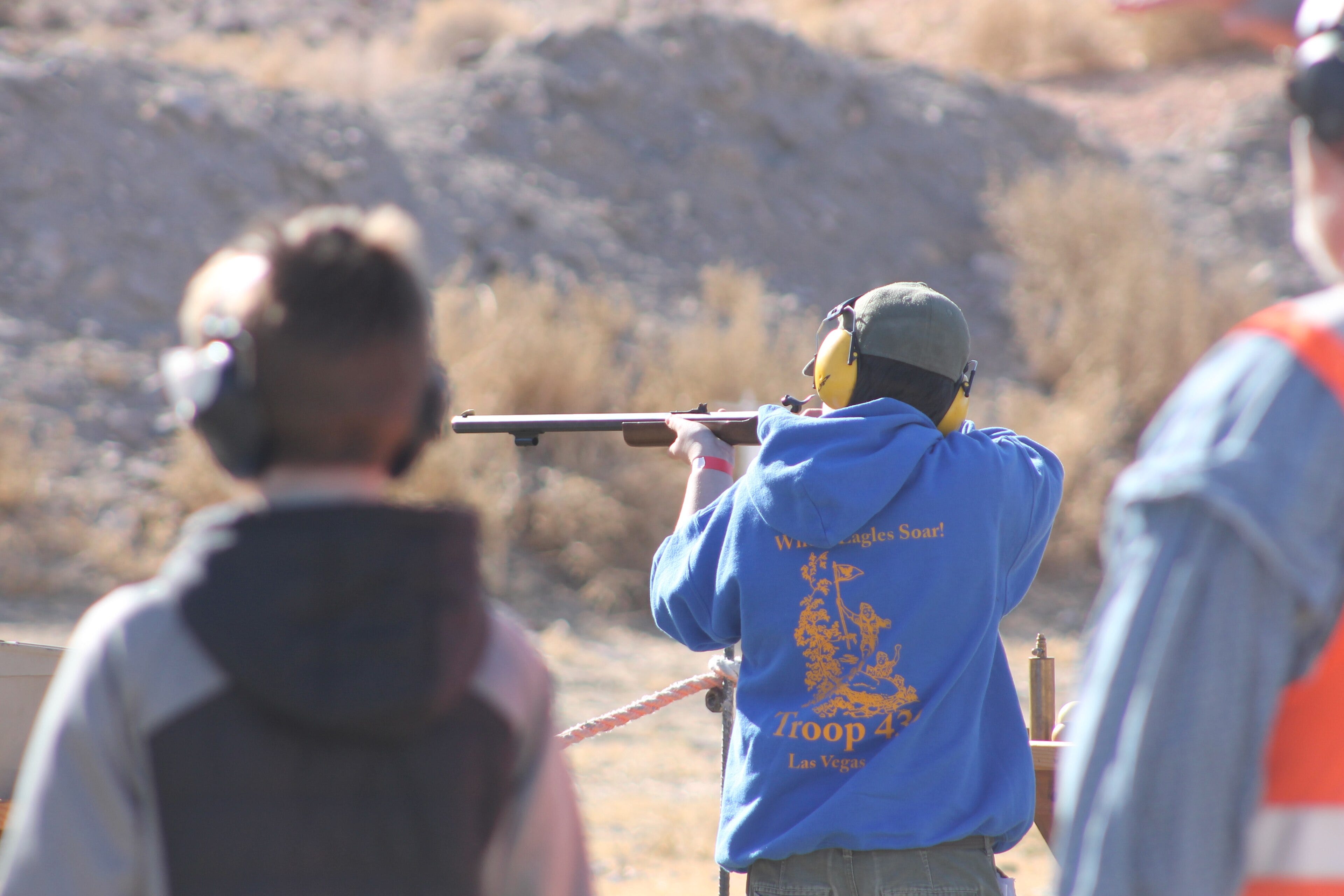
I grew up in East Tennessee so naturally, I was surrounded by conservative Republicans. A lot of them are closer to me ideologically than it might seem. They’re anti-monopoly. They’re against corporate power and government power both. They like the idea of an enemy small enough that a regular person could take it on. That’s a big part of why they love the Second Amendment. It feels like a break-in-case-of-emergency option, a rifle in the closet for the day an authoritarian state finally comes for them.
I’ve never believed in that line of defense. I love shooting guns, and I like blowing things up on the farm with Tannerite. But I have never once believed that the gun in my closet would protect me from the police or the government. A shootout with the military ain’t gonna end well for a citizen, and Ruby Ridge and Waco are the proof.
And losing the shootout isn’t even the worst of it. We can’t sustain ourselves anymore. We can’t produce our own food, our own power, our own medicine. This ain’t the country it was even in 1900, when a household could feed itself and heat itself and patch itself up off what it had on hand. We buy all of it now, from somewhere else, made by somebody else. And yet we hold onto the fantasy that we could mount a revolt with small arms.
We’ve all heard the phrase “opiate of the masses.” Here in the South we have a few. One of them, the literal kind, is the opiates the Sacklers poured into our towns. But the Second Amendment is another. Guns sell us the false hope that there’s a last stand waiting somewhere down the road, a day we’ll take on the government and whip ‘em. The truth is that one person, or hundreds with guns aren’t gonna stand against a modern state.
The foundations of the tyranny these guns are supposed to stave off are being laid and improved every day. Built by Democrats and Republicans, by the very men we elected to stop it. Peter Thiel and Palantir and so much of the tech world are creating an Orwellian nightmare of tracked phones, Flock cameras, drones, scanners, and the like all powered by AI.
My father-in-law worries about the “fifteen-minute” city, and he’s not wrong to worry about being watched and penned in, but the people doing the watching are Trump and Musk and Thiel, the ones my father-in-law was told loved freedom and free speech and the right to assemble. They don’t. They never did.
We can’t shoot our way out of any of it. Not out of ICE and its detention centers, not out of the Flock cameras, not out of an AI-backed surveillance state that watches everybody all the time. The gun in the closet is of no use.
And the rifle is one of the weakest checks we’ve got on power, and it’s pointed at the wrong enemy anyway, because the power squeezing us now is as much corporate as it is government.
So if the gun won’t save us, what will? Each other. A people united. A press that tells the truth about who’s doing what to whom. Neighbors who show up. A real stake in the economy we live in, owning some of it together instead of renting our whole lives from the people at the top.
That will give us more freedom than any gun ever could, because a rifle is something we hold alone, and alone is exactly how the powerful want us to stay. We have to build power the only way it has ever been built, by uniting a lot of people around the same demand.
The other side already showed us how it’s done. Neoliberals didn’t win the last fifty years because they were right, they won because they united. They came from every corner and pulled in the same direction.
They had their economists, Hayek and Milton Friedman, making the case that anything public was a step toward tyranny. They had Ayn Rand taking that cold theory and making it feel like plain common sense. Making greed sound like a virtue. Making the man at the top sound like he’d earned every dime and owed you nothing. They had James Buchanan handing them the argument that the government itself was the enemy.
And they had Lewis Powell. A corporate lawyer who in 1971 wrote a memo laying out how business ought to organize, to guarantee corporate interests never take a back seat to what people need or want. Then that same year they put Powell on the Supreme Court, and justice started working for business, not people.
Economists and writers and lawyers and donors and judges. All of them agreeing on one program. Sell it off, run it cheap, get the public out of anything public. And they ran that one play everywhere, for fifty years, until it was just the air we breathed that wasn’t corporate owned.
And what about us? Well, something big is happening. New ideas are finally winning. Mamdani in New York. Melat Kiros in Colorado. Darializa Avila Chevalier and Claire Valdez are taking their seats. Good people, all over the map, knocking off the folks who said it couldn’t be done.
But winning the seat is not the same as agreeing on what we’re building. Neoliberals had one program and ran it for fifty years. We’ve got a hundred good candidates and a hundred good ideas and no single demand. We’re set up to win races and still lose the country.
If we finally do agree on what we’re building, conservatives will have two words ready for it. Socialism or Communism. They’ll point at Venezuela and the Soviet Union and the Great Leap Forward that starved millions, and I’ll give them every bit of it. That was an authoritarian command rule, run badly, by ruthless men who answered to no one. It has nothing to do with what we’re talking about. We’re talking about the country we once were.
Alexander Hamilton built this nation’s economy on public credit and public purpose. At our peak the public owned close to forty percent of the hospitals in America outright, ours, run for us. We built the dams and the power lines and a middle class bigger than any nation had ever put together. We didn’t import a bit of that from anywhere. We did it here, and then we sold it off. What they call socialism now is mostly just the way we used to live.
They’ll tell us the government wants to take our house and our truck and our farm. But that fear only works if we picture the government as some separate power up above us, something we don’t control and can’t touch. If that’s what government is, then sure, all we can do is hope it stays kind, or hope it stays too weak to hurt us. That’s a miserable way to live, hoping whoever’s in charge has a good heart. Don’t fear the thing and don’t try to starve it. Own it. Make the government ours again, and use it to own the things we all depend on, together.
Because right now the government isn’t ours, and the proof lies in who it protects. We’ve built a country where the powerful are beyond the reach of our own institutions. The Attorney General, the FBI, the SEC, the FEC, none of them ever lay a hand on the people at the top. Jeffrey Epstein moved through this country for years confident the law was something for other people, not folks in his elite network. Wall Street’s finest burned the economy down and got bailed out for the trouble. There’s no accountability for torture, none for war crimes, none for the financial crimes that wiped out a generation’s savings, and none at all for the Sacklers, who got rich addicting and killing whole communities and walked never did a day in jail. That’s who our government protects right now, and it isn’t us. The only way that changes is if we make it ours again and run it ourselves.
And the vast majority of us, Americans who play by the rules, are not protected. The basic stuff of a decent life keeps drifting out of reach. Housing. Health care. Education. Child care. Gas. Electricity. Food. The foundation a person needs to build a life on has gotten more expensive every year, faster than wages, for decades on end. And the whole time, the corporate Democrats and the comfortable Republicans keep telling us the system is basically fine. It works. It just needs a tweak or two.
History says otherwise. When we look back, it’s clear we almost never made big changes because we sat down and decided to. We made them when a catastrophe left us no other choice. The crash of 1929. Pearl Harbor. The Civil War that finally ended slavery after we refused to end it any other way. The building has to be on fire before we’ll agree to fix the wiring. But this time the catastrophe is already here. It didn’t arrive in one terrible morning, so it doesn’t look like 1929 or Pearl Harbor, but here we are, a country where the powerful answer to no one and working people can’t afford to live decently. We are a country in the middle of a disaster. We’ve gotten used to things getting worse and worse, slowly but surely.
We don’t have to wait for the next catastrophic event. We can build the economy on purpose, restore accountability on purpose, earn back people’s faith on purpose. But we cannot do any of it scattered, one good candidate and one good idea at a time, each of us sitting alone with our own rifle in our own closet. We have to do it the way it’s always been done. Frederick Douglass told us how a long time ago. Power concedes nothing without a demand. It never did, and it never will. So let’s decide what our demand is, together, and let’s make it before our dismal state gets even worse.
Corbin Trent
When are they going to draft you Corbin? I think you would be an excellent member of Congress, an impressive articulate speaker with vision and moral clarity. Not what centrist democrats want, but the rest of us do.
The pen is mightier than a sword (or a gun). The problem is not so much that big business controls all the guns; rather it is that big business has control of so much of the media.