


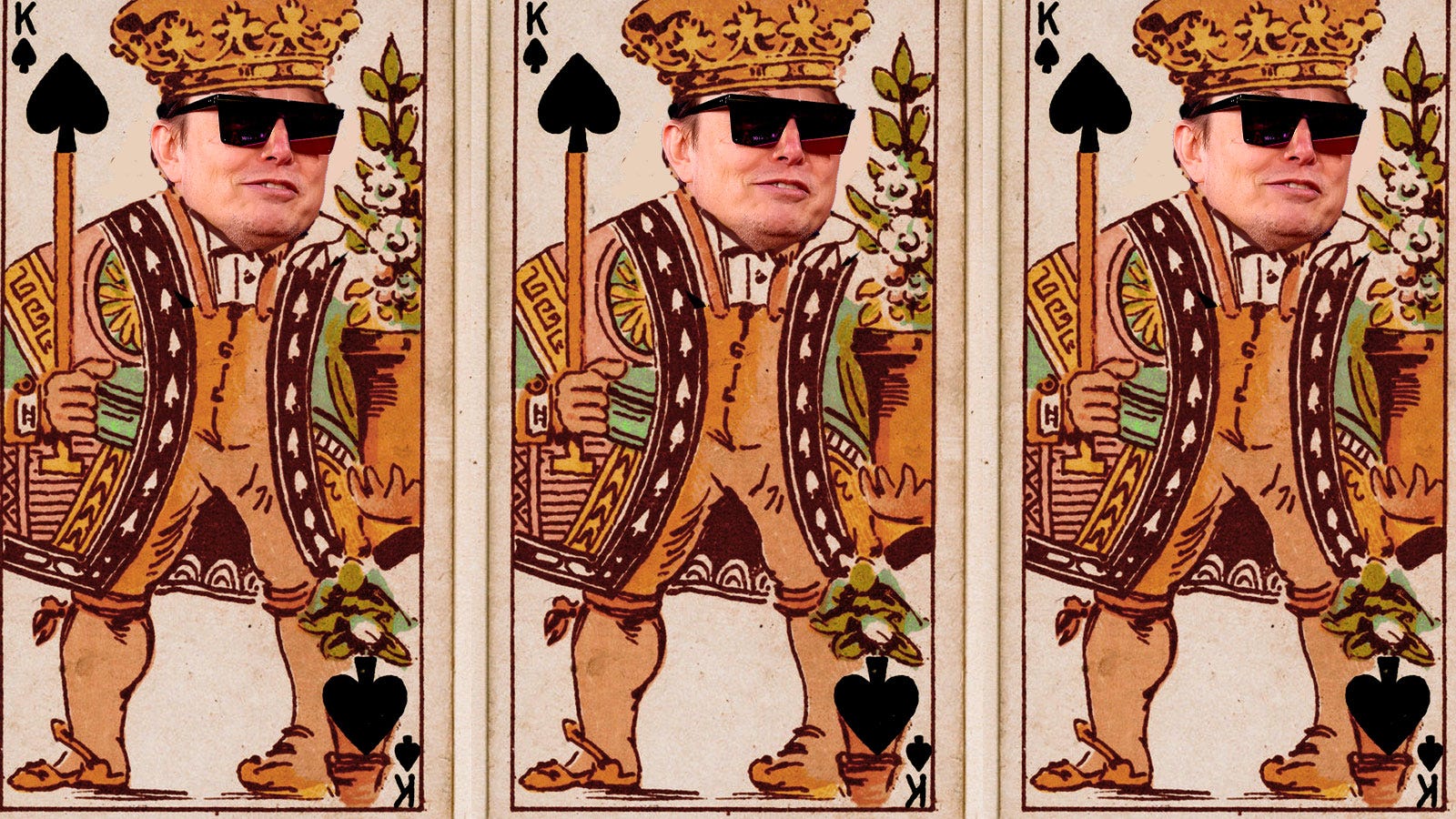
SpaceX goes public today at around $1.7 trillion. Elon Musk owns enough SpaceX stock that, on top of everything else he holds, Musk becomes the first person in human history to cross the trillion-dollar line. The coverage will be all hype. Unprecedented. A genius. Where’s he going next? What does the future hold?
It wasn’t like Elon Musk invented some amazing capacity. He didn’t do something transformational for the world. He didn’t harness electricity. He didn’t invent the transistor. He didn’t invent rocket flight. He didn’t invent satellite technology. He didn’t even make them much better.
What he did was learn how to game the system. He took what America built through generations of investment and generations of hard work and turned it into a profit center for himself. He took American loans, American intellectual property, American space, American airwaves, and turned them into a wealth engine for one man.
In a purely capitalist system, SpaceX wouldn’t exist. It would’ve died in 2008. The company was broke, three rockets had failed, and Musk was burning the last of his money. Then NASA wrote a $1.6 billion contract.
Tesla exists because of a half-billion-dollar loan from the American government, handed over in 2010 when the banks wouldn’t touch him. The deal gave the government the right to buy three million shares of Tesla stock at a locked-in cheap price. That was our cut if the company took off. The company took off, and Musk rushed to pay the loan back nine years early, because under the deal, early repayment canceled the government’s shares. They were worth about $270 million the week he wired the money, and Tesla’s stock has multiplied many times over since. The press called the repayment a triumph. We got our money back with a little interest, and he kept the stock the American people were due.
SpaceX is the same story just bigger. In a purely capitalist system, SpaceX wouldn’t exist. It would’ve died in 2008. The company was broke, three rockets had failed, and Musk was burning the last of his money. Then NASA wrote a $1.6 billion contract for cargo runs to the space station, and that money built the Falcon 9. The people who study this industry say it plainly. NASA is what saved the company when it was on the brink of bankruptcy.
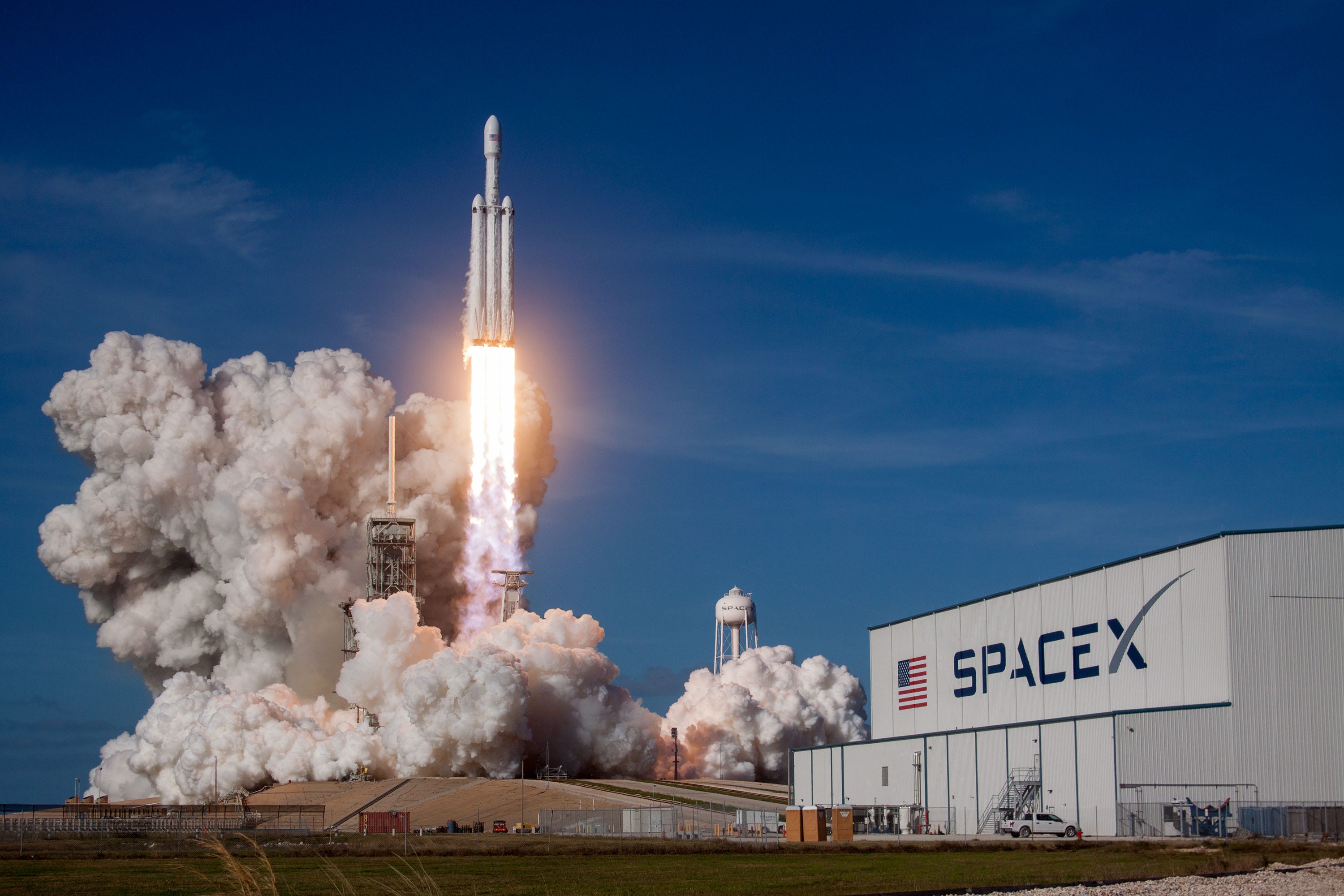
And NASA by then was an agency we’d been squeezing since the 1980s. We decided, instead of doing things ourselves as a nation, instead of demanding the lion’s share of what we’d developed over sixty years of rocketry and satellites and spaceflight, that we’d hand it off to billionaires and let them compete for the contracts. SpaceX now holds around $22 billion in federal contracts. Across the whole Musk empire the public money runs closer to $38 billion. The launch pads, the airwaves, the satellites overhead, the early customers, the technology our space program spent two generations developing. He built on all of it, and we kept no share of it.
I’m not saying SpaceX is bad at rockets. The rockets work. But outbidding Boeing and Lockheed, the most bloated contractors in America, is a low bar, and he cleared it with technology our space program developed, on contracts we paid for. And China is proving right now that none of it was one man’s miracle. They’re behind on reusable rockets and behind on launch rates, sure. They’re also closing fast, as a national project, with state companies and state-backed startups and satellite constellations in the tens of thousands. Getting to space is something a country can decide to build and own. We decided to hand it to one man instead.
SpaceX now holds around $22 billion in federal contracts. Across the whole Musk empire the public money runs closer to $38 billion. The launch pads, the airwaves, the satellites overhead, the early customers, the technology our space program spent two generations developing. He built on all of it, and we kept no share of it.
The rest of his fortune sits in Tesla, and that deal is even worse. Tesla is worth more than every other major carmaker on the planet combined. Toyota, BYD, GM, Ford, Volkswagen, Honda, Mercedes, BMW, all of them together, still short of Tesla. Plenty of those companies earn more actual profit than Tesla does. Toyota alone makes several times Tesla’s money. The valuation isn’t a measure of the business. It’s an obvious bubble, one of those bubbles people will look back on like the tulip bubble and ask how anybody ever believed it.
Meanwhile the tariffs are the only reason Chinese carmakers aren’t whipping us in our own market. BYD passed Tesla as the biggest seller of electric cars in the world, and it makes a good one for around ten thousand dollars. Musk has admitted himself that without trade barriers, Chinese automakers would demolish most of their rivals. The tariff wall protects the whole American industry, and Tesla is its single biggest beneficiary. We’re babying these companies instead of pushing them to get better, and we’re not taking a dime of ownership while we do it.
They’ll tell you the wall is national security. It isn’t. We haven’t kept our means of production. We don’t make enough steel even for ourselves, and that’s while we’re barely building anything. Start building at scale again and we’d be importing even more of it. We can’t build transmission lines or move energy around this country. We’ve lost the machine tools. We shipped the means of production to China and other countries, and now we’re handing what’s left to a handful of billionaires. National security would be making these companies better. It would be forcing them to share the patents we paid to develop. It would be forcing a universal charger. It would be making them earn their money through quality production that competes on the open market, not through bubble valuations.
Then they handed him our retirement accounts. When a company joins a major stock index, every fund tracking that index has to buy it. Nobody decides the company is worth the money. The rule says buy. So every two weeks tens of millions in paychecks pour in on autopilot. SpaceX wanted that money sooner than the rules allow, because Elon Musk is special, apparently. His advisers pushed the index providers to change the rules, and two of the three folded. Nasdaq rewrote its policy so a company like SpaceX can join in fifteen trading days instead of three months. Russell cut its wait to five. Somewhere around $22 to $27 billion in automatic buying will hit a stock with almost no shares actually trading. The S&P 500, the biggest index of them all, refused. It said earn your way in, a company that loses money doesn’t qualify. One gatekeeper said no. Two said yes. The rules got bent for him, and that’s not speculation. It happened. One more handout, except this time the money is yours, pulled out of your paycheck and pointed at his stock whether the price makes sense or not.
We’ve watched this movie before. Amazon went a decade without real profits and the market funded it anyway, because everyone could see the government handing it advantage after advantage. Bezos planted the company in Washington State to dodge sales tax, and for twenty years Amazon skirted sales taxes across most of the country, a built-in discount on every order that local stores couldn’t match, because they had to charge the tax. It crushed them. Then cities lined up to hand the richest man alive billions more in breaks for a headquarters. We supported these guys, who then took everything and ran.
Now we’ve created a class of men who hold more wealth than many states. Musk holds more than many countries. That concentration gives one human incomprehensible power, and we will hand him more of it every year. We outsourced our production to China. Now we’re outsourcing our state itself to a few men, who just sub it back out to us.
Tax the oligarchy and the money flows back as rent to the same oligarchs, the medical ones, the housing ones, the tech ones, and we get nothing for it. No power, no stability, no better income. We get a company town as a national economy.
The answer is not a wealth tax. Tax Musk and Bezos and Zuckerberg, pull the money into the government, push it back into broken systems, and you haven’t restructured a thing. Pull wealth from Musk and pour it into a healthcare system that already swallows a huge percentage of dollars before they reach a patient, and you don’t get better health or longer lives. You get more valuable healthcare companies. Pull it into housing allowances and down payment assistance, and you don’t get cheaper homes. You push the prices up, hand the gain to private equity firms that already own the housing, and make it harder for the next family that wants to own a home. A wealth tax spreads a little money around the top and leaves the same people owning the same things. It doesn’t move power. Tax the oligarchy and the money flows back as rent to the same oligarchs, the medical ones, the housing ones, the tech ones, and we get nothing for it. No power, no stability, no better income. We get a company town as a national economy.
The answer is ownership. Take back a stake in what was built with our money, our research, our protection. And before anyone says it can’t be done, Donald Trump has shown us it’s possible. His administration has taken a 10 percent stake in Intel, stakes in lithium and rare earth companies, and a golden share in US Steel. The taboo is broken. The government demanding equity for its support is now just a thing that happens.
But the golden share in US Steel is veto power with no money in it, a say with no stake. The Intel shares are also money with no say. None of it comes with the part that matters, which is input on where these companies go and what they do with the resources we let them use. We protect their intellectual property, most of which we developed. We protect their markets. We give them our military, our courts, our FBI, a stable country to get rich in. And what we’re getting back is poorer and sicker, with a shrinking share of the things that are ours.
Real public ownership means both. The profits and the say-so, together, the demands any investor would make. When the public builds the thing, the public owns a piece of the thing. Call it American Equity. We knew how to do this. The New Deal did it. The Arsenal of Democracy did it. The country that built the Transcontinental Railroad and the New York City subway did it. That system, the one Hamilton started with public credit behind American manufacturing, is the system China runs today. They took our playbook. We traded it for stock market rackets.
We can raise hospitals. We can send rockets into space. We can launch satellites, and we can do it for ourselves. There’s nothing particularly amazing about Elon Musk except his willingness to fleece the American people out of what’s theirs. So stop. Stop handing him the contracts. Strip the special treatment. Claw back the intellectual property and the advantages we built for him, and go to the moon ourselves again.
They stop existing because they fail to come together and remove the rot, the corruption, the inequality, and demand accountability from the people who’ve dodged it the longest. We’re at the part of the cycle where we take our stuff back, or we fail.
There’s a cycle to this. Countries in the spot we’re in generally stop existing. Not because they lack potential. Not because they have nothing worth producing. They stop existing because they fail to come together and remove the rot, the corruption, the inequality, and demand accountability from the people who’ve dodged it the longest. We’re at the part of the cycle where we take our stuff back, or we fail.
Today they crown the first trillionaire. They’ll say he earned it. The truth is simpler and uglier. He’s a welfare trillionaire. Half a billion in government loans, tens of billions in government contracts, sixty years of our research. We made him.
And a wealth tax won’t unmake him, because taxing the mega oligarch just funds the baby oligarchs. The only way to reclaim the power they’ve taken from us is to take back some of what’s ours, some of our capacity, some of our infrastructure, our share of the things we paid to build. Bernie Sanders said it this week, the public should own half of the big AI companies. We need to be thinking a lot more along those lines. If we want homes people can afford, healthcare that doesn’t bankrupt us, and work that pays, it starts with owning things again.
Corbin, I hope you will make contact with Graham Platner. I have suggested to his staff that he connect with you. Your views would be useful to his policy development.
The times we are living in. When the richest man in the world is in reality a poor bastard trapped in an echochamber of his own making, A gullible con-man with a white supremacist, climate science-denying worldview, who has played a decisive role in corrupting the 2024 US elections, in promoting far right propaganda and disinformation, in dismantling the USA‘s democratic institutions and foreign aid, and in illegally stealing US citizen’s private data. This is the man with 240+ million followers on his own anti-social media platform, who managed to rig listing rules so that ETFs and index funds automatically purchase those overvalued shares, while allowing his investor buddies an obscene, unethical exit at the expense of common retail investors and pension fund beneficiaries. Let‘s just call this IPO what it is: another shameless act of looting the working class by the billionaire class in broad daylight.