


Yesterday was America’s 250th birthday. The president spent the weekend telling us who the enemy is. He stood in front of Mount Rushmore and called communism the greatest threat this country has ever faced. Worse than two world wars, worse than Pearl Harbor, worse than 9/11. He pointed all of it at a handful of democratic socialists who just won primaries, people most Americans hadn’t heard of a year ago.
But these candidates aren’t communists. They just believe a government and its people can build big things together. Trump and all the other sky-is-falling politicians aren’t fighting communism, they’re fighting the way this country actually got built.
We tell ourselves a story on these birthdays; that America was always a free market and nothing else. It was never true. Alexander Hamilton wanted our government smack in the middle of the industry we were building. He set up a national bank to do it and argued to Congress that the markets wouldn’t build American manufacturing on their own. He said the public purse had to make up the difference.
That happened in our founding years. A hundred years later, in the Progressive Era, cities took back public ownership of water and gas and streetcars, because private owners were bleeding the public. Our federal government went out West and built dams and irrigation that turned desert into farmland, and made Los Angeles and Phoenix grow where nothing was supposed to grow. Government money, government workers, people doing more together than they could alone—right from the start.
We’ve been sold the story that pure, free market capitalism is the real America for forty years. We bought it and it’s been hurting us ever since.
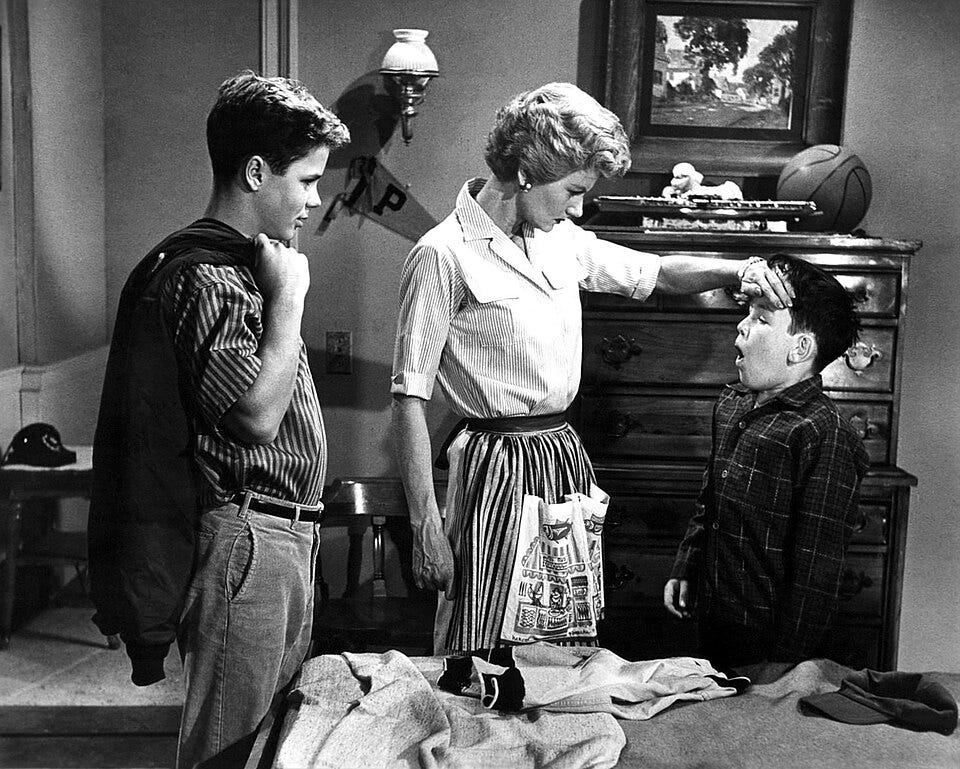
We ran our biggest socialist experiment from the 1930s to the middle 1960s. We wanted to find out what government workers and engineers and scientists and laborers could do when they worked hand in glove with contractors who were good at the job and accountable for it. We got our answer. We could build things that made America the awe and wonder of the world. We built subways. We ran electricity out to the country through the TVA and public power. We laid down more than 46,000 miles of interstate highway, with the bridges and the tunnels to carry it, coast to coast and border to border. We built the aqueducts that turned California into a Garden of Eden. In 1950 alone we built around 1.9 million homes, a pace we haven’t matched since. Capitalism didn’t create the era of Leave it to Beaver and Madmen and The Right Stuff, socialism did.
The American dream wasn’t just growing, it was widening, to Black folks and Latinos and immigrants and Asians and women. That’s how we built the biggest middle class the world has ever seen.
But then it stopped. And then we did something stranger than stopping. We started selling the American dream off. People at the top had gotten scared somewhere along the way, scared we’d realize we didn’t need them the way we’d been told we did, so the things we used to own together,—our shares in the road and the water and the power and the care—we handed to private companies who promised to run them cheaper.
Only they didn’t run them cheaper. They ran them for profit and let the rest go to hell. Every time we sold off something we used to hold in common, we lost more ability to give people a decent life at a price they could afford. The decay wasn’t an accident, we chose it and we keep choosing it.
We knew better, after building all we built. We learned that a city could build its own subway, with its own engineers and its own crews, instead of offloading it. We learned a state could build its own infrastructure, and with federal help, run wire out to the farms. We not only learned we could build housing, health care, child care and schools for ourselves, but that we had to.
Capitalism, with its profit-oriented DNA, was never going to do it for us. Capitalism works best as an engine sitting on top of a public foundation, something more democratic and more shared and more owned in common.
Companies were never going to build the interstate system on their own. There’s no money in it, or the money doesn’t show up for a hundred years, and companies by nature don’t think long term. Even railroads, which private money did build, got their land handed to them by the public and their losses covered by the public. Roads and wires and water systems, which are the foundation of daily life (not to mention commerce), are either built by the public, or they don’t get built.
There’s a bridge in the news right now, up in Michigan. The Ambassador Bridge connects Detroit to Windsor, Ontario, and it’s the busiest commercial crossing on the border, about a quarter of all the truck trade between the United States and Canada. One family owns it, the Morouns, and they take a toll on nearly everything that crosses, somewhere north of sixty million dollars a year. One family, standing at the border of two nations, taking a cut of the trade between them.
They did it on purpose. Back in 1927, the mayor of Detroit wanted a public bridge, owned by the cities. Private money fought back, and it went to a public vote. The private version won eight to one, so the mayor gave up and said he’d bow to the will of the people. Henry Ford, who backed the private bridge, said private business is the only way anything gets done anymore. The bridge opened in November of 1929, about three weeks after the stock market crashed.
Tolls couldn’t cover the costs. Within a year the company had defaulted on the interest it owed, and by early 1931 it had defaulted on the bonds too. It spent the rest of the decade sliding toward bankruptcy. The great private enterprise, after stomping out the public bridge plan, couldn’t pay its own bills.
In a totally free market, the kind these people say they worship, that’s the end of the story. You fail, you fail. Your creditors take the thing and sell it on the courthouse steps for pennies on the dollar, and you walk away with nothing but the lesson. That’s the discipline they tell us makes the market holy.
But that’s not what happened, and it’s never what happens to them. The private company was allowed to reorganize. They wiped out the people they owed by turning their bonds into stock. The owners kept their bridge and to this day it’s still owned by the same family, the Morouns. The law that let them shuffle their finances barely existed then. The corporate reorganization rules arrived in 1934 and 1938, in the middle of the New Deal. The bridge was reorganized in 1939. Henry Ford, who said governments can’t do anything anymore, wrote the bankruptcy law that saved Henry Ford’s bridge.
That’s the tell, and once you see it, you can’t stop seeing it. There’s no such thing as a free market that also has bankruptcy protection. Failure is supposed to be total. The corporation, limited liability, the reorganization that lets you fail and keep your thing, those didn’t fall out of the sky. Private interests created government loopholes, and we the public are there to cushion the blow every time a private companies fails. The same men who say we the people can’t do anything are the same men we the people keep bailing out.
Ford said only private business could build, but the dams and the wire and the interstate said otherwise, and kept saying otherwise for thirty years. Meanwhile, Ford’s was proven wrong within three years and stayed wrong for a generation.
The kind of socialism that empowered us to build wasn’t just for the left. Fiorello LaGuardia, the mayor of New York, was a Republican, and he brought the subways under public ownership and set up the first public housing authority in the country. He tried to build a city-owned power company too, until the private utility company ran to court and killed his plan. Nobody called that Republican communist for trying to build a public power company.
Socialism only became a scary word through decades of propaganda. It became so lethal it could take down any political campaign, and in the McCarthy years, any career.
Skip ahead to 2026. Canada and the state of Michigan just built the public crossing that should have been built in 1927. It’s called the Gordie Howe. Six lanes, about six and a half billion dollars, and it’s finished. The toll booths work and the customs plazas are done. But it’s sitting there closed. The ribbon-cutting was set for June and got called off the day before. Now the opening’s been pushed with no new date, and Canada’s prime minister says the delay came at the request of the United States. Trump says he won’t open it until America gets compensated. He floated that we ought to own half of it. And here’s the twist. The man who owns the old private bridge, who stands to lose money when the public bridge opens, donated a million dollars to Trump.
Anywhere you look you see the same story. Last year the IRS built a tool so you can do your taxes online, government approved, for free, and around three hundred thousand people used it. Nine out of ten loved it. It worked. So Intuit, the maker of TurboTax whose entire revenue is based on taxes being a miserable, expensive chore, spent millions fighting the new tool. They also donated a million dollars to the president’s inauguration, just like the bridge family did, and by the end of the year the government killed the tool. The head or Treasury explained, surprise, surprise, that the private sector can do a better job. Henry Ford’s line almost word for word, a hundred years later.
We the people build a thing that’s cheaper, that works and belongs to everybody. That’s socialism. Those who profit from the expensive, broken version buy a politician and shut it down. Then they turn around and tell us the government can’t do anything. They pocket the cash and clap for capitalism.
That’s the story, start to finish. The Henry Fords of this country are good at what they do, some of them, but they aren’t the lone geniuses they think they are. They build on a foundation the rest of us laid, the franchise the government granted them and the courts that enforced their contracts and the roads their cars needed and the bankruptcy code that caught them when they fell and the interstate that made their business possible.
They didn’t do it alone. They are the most subsidized people in the country, and they’ve spent a hundred years telling us that we’re the moochers and they’re the makers. It’s the other way around. It always was.
God bless you Corbin!
... and my fallback response regarding Socialism:
Socialism: Expecting government services in exchange for the money you pay in taxes.
Is that really such a radical idea?
Bravo!!!!