


I’ve been hearing from a lot of candidates and campaigns lately. This one is for them.
In 2015 I sold my food trucks to volunteer for Bernie Sanders. That turned into co-founding Brand New Congress and Justice Democrats, then helping elect Alexandria Ocasio-Cortez. I worked as her strategist and communications director for a few years after that. I’ve spent the better part of a decade pretty close to the center of the progressive movement. The following is what I learned.
Back in 2016, Hillary Clinton said Bernie Sanders’ policies were “fairy dust and rainbows.” The point wasn’t just that big things were hard. The point was that big things weren’t needed. The system was basically working. America was great. If you thought otherwise you weren’t serious, or you weren’t paying attention, or you were the kind of person who gets dismissed at Brookings as insufficiently realistic.
That was the consensus. Serious people. Credentialed people. Times columnists and think tank fellows and television regulars, all reading from the same hymnal. Don’t rock the boat. Take what the system offers. Be grateful.
That consensus didn’t protect us from Donald Trump. It elected him. Twice.
Because when someone came along and said the system is rigged and I’ll burn it down, 80 million people said finally. They were wrong about the messenger. They were completely right about the problem. The “things are actually pretty good” position was the most destabilizing thing anyone could have said. That realism was actually radicalism. And we’re living in the results.
The market doesn’t work for the things people actually need to live. Not anymore. Maybe it once did. It doesn’t now and the evidence is everywhere.
We spend $6 trillion a year on healthcare. More than any country on earth, by a lot, and we rank last among wealthy nations in outcomes. Last. Tens of millions of people are one diagnosis away from financial ruin. Rural hospitals are closing. The market has had decades to fix this. It hasn’t fixed it. It has extracted wealth from it while delivering less.
Or consider the mRNA vaccines. The federal government funded the foundational research for 35 years. When COVID hit, the government paid Moderna and Pfizer billions more to finish the job and purchase the doses. Moderna and Pfizer then walked away with over $100 billion in combined revenue. The public got the bill twice, once as taxpayers funding the research, once as patients paying the prices, and the companies kept the patents.
The same pattern shows up in housing. We have been short on housing for decades. The market hasn’t built our way out of it. Cities that people actually want to live in are unaffordable. But so are the rural areas. I live in Lenoir City, Tennessee. Population about 11,000. Here a studio apartment runs you a thousand dollars a month.
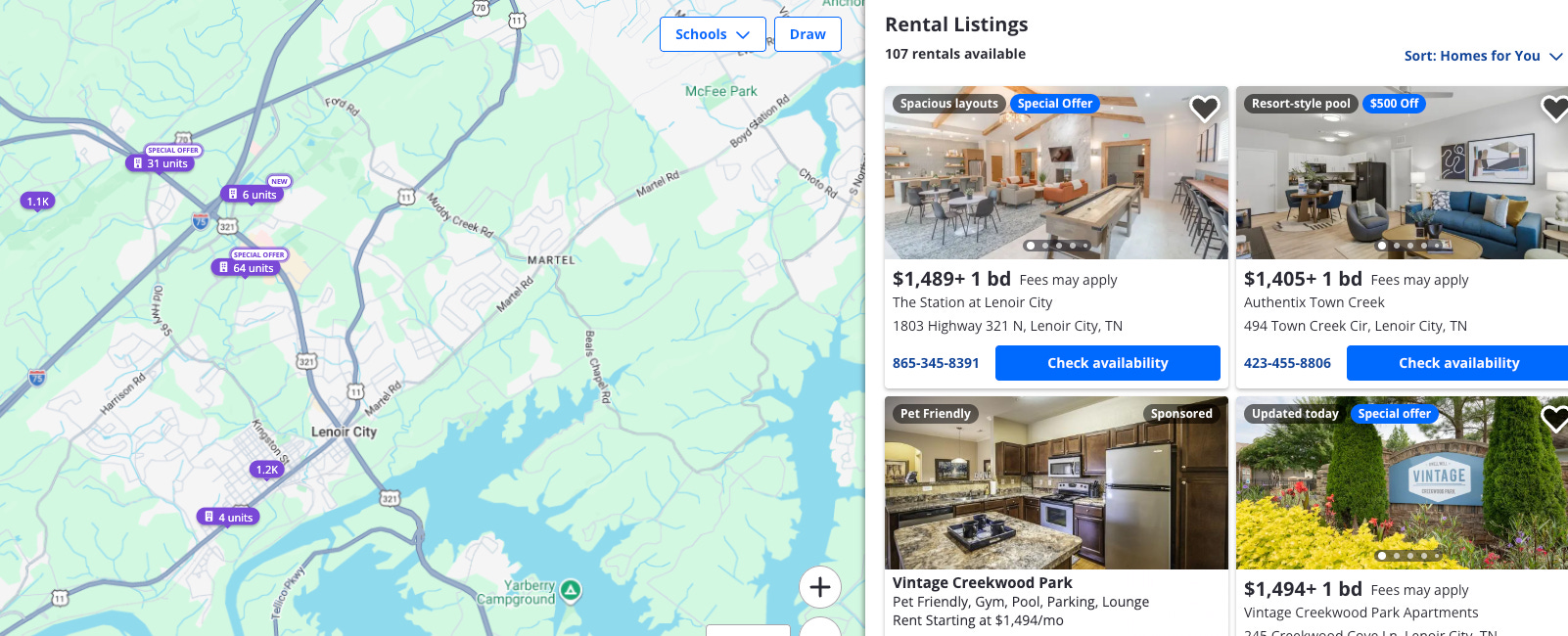
And what did our nominee offer? Kamala Harris proposed a $25,000 grant for first-time home buyers. I understand the instinct. But the issue is supply. You pump $25,000 into a market that isn’t building enough homes then prices go up. The money flows straight through the buyer and into the seller or the landlord and the developer, and nothing new gets built. It’s the same story as healthcare. We keep pouring money into broken systems I assume because it seems like a logical solution. But it only makes the problem worse. .
Too many people think of American problems as spending problems. But if I walked into my local grocery store and wanted 15,000 pounds of beef, it wouldn’t matter how much money I had. You can’t buy what doesn’t exist. We don’t have enough housing. We don’t have enough doctors. We don’t have enough childcare slots. Pumping money into markets that aren’t producing those things doesn’t produce them. It inflates the price of whatever scraps are left. You fix a capacity problem by building and training, not injecting more cash.
We built our way out of the Depression not just by writing checks but by doing it ourselves. The government built water and irrigation infrastructure that turned the Central Valley into the food supply for half the country. It strung electrical wire to farms and small towns across the rural South and Midwest that private utilities had written off as unprofitable. We built the industrial capacity that became the Arsenal of Democracy. That was public investment. That was us deciding some things are too important to leave to the market.
We don’t believe that anymore. Or rather, our leaders don’t. Those few that do get stopped before they can do anything about it.
AOC won. She scared people badly enough that they spent millions trying to destroy her. She had the right diagnosis. She had the right policies. She had the courage. The things she ran on didn’t happen. Not because she wasn’t good enough. Because she walked in alone. A seat won in isolation gets absorbed. The machinery of this system is designed to absorb individual attacks.
Progressive politics has the same capacity problem that the rest of the country does. We don’t have enough aligned people in power, and we can’t fix that one seat at a time any more than we can fix the housing crisis one subsidy at a time.
Which brings me to where we are. An American president is suggesting on a Tuesday night that Iran should cease to exist. Not metaphorically. And the people who are supposed to be the opposition are writing letters. That is where we end up when the people in charge have no affirmative vision, no plan to build anything, and no team capable of fighting for it even if they did.
So when people ask me about candidates, I’m not asking whether they have the right positions. Most of the good ones do. I’m asking whether they understand what those positions are actually up against. Whether they’re ready to fight it.
I’m looking for bold, specific, public policy positions. Not values. Policies. Medicare for All. Public ownership of AI infrastructure. A housing program that builds and owns, not just subsidizes. Drug pricing reform that takes back the patents on publicly-funded research so the public owns what the public paid for. You would be amazed how many candidates won’t put this out publicly.
A willingness to say out loud that the Democratic Party as currently led is the problem. The people running it have failed. They have names. Saying so isn’t radical. It’s honest.
An understanding that our institutions have been captured. The FEC. The FDA. The SEC. The DOJ. The Supreme Court. Not neutral referees. A coordinated fifty-year project to make progressive governance legally impossible. A candidate who won’t say that isn’t ready for what’s coming.
A willingness to take risks inside the party. Not fighting Republicans on television, which costs nothing. Backing primary challengers against Democratic incumbents who are blocking the agenda. Making it more dangerous to oppose you than to support you. Almost nobody will do this.
All of those are necessary. None of them are enough.
A commitment to building a team before they win. Not after. Campaigning alongside candidates in other states and districts. Endorsing across geographies. Treating their race as part of something bigger than their district. This has never been done at scale on our side. It’s the thing that would change everything.
People resist this one the most, so let me explain why it matters.
A candidate’s victory, whether it’s a House seat or a Senate seat, can only accomplish things within the framework of how big and powerful their team is, how aligned that team is, and whether they built it before they walked into the building. It has to happen before, not after, for two reasons. First, because building it before is what proves you’re willing to put skin in the game and take real risks. Anyone can talk about solidarity after they’ve won. Doing it before, when it costs you something, is what makes it mean anything. Second, because you cannot change who’s sitting at the table from inside the table. You have to build the power to change it from outside. That means committing to each other before any of you have a seat, when the only thing binding you together is the mission itself.
And it matters to voters. Candidates running on these ideas as individuals are just putting policies on a page. They’re giving speeches. When they show up with a team, when they’ve committed to each other before they’ve won anything, they’re showing voters they understand what’s standing in their way and they have a plan for taking it head on.
Underneath all of it, public ownership as the mechanism. Not regulation. Not subsidy. Ownership. We did it before. We can do it again. When a technology has the power to transform society, it’s unwise to leave it in the hands of a tiny group of self-absorbed billionaires whose only goal is to maximize profit, who consistently show contempt for the rights and interests of their fellow Americans, and who aren’t accountable to anyone, especially with a federal government this weak. We don’t let private companies build nuclear weapons. We don’t let them decide when or how to use them. We don’t let them raise armies. We understand some things are too powerful to leave in private hands. AI is one of those things. It’s built off of thousands of years of human data and thought. It’s built off of major public investment. It’s built by us. It should be working for us. The only thing that’s got a single chance of ensuring that is if we own it. Just like Alaska gets dividends from its oil reserves, the American people should be getting dividends from their data and their investments.
Nobody is coming to do this for us. It takes a team. People who said all of this out loud before they won. Who committed to each other before they walked into Washington. Who understand that their victory only matters if the person running three states over wins too.
That team is what I’m building with A Fight Worth Having. Not candidates with good vibes. Candidates who’ve passed this filter. Who know what they’re up against. Who are ready to fight the right people, including the ones in their own party.
If you’ve been reading this and asking what do we do, this is what we do.
Go to AFightWorthHaving.com
Corbin Trent
The problem you complain about found its roots in 2016 when Bernie failed to challenge Hillary at the convention and show the world what a true fraud she and her pals Donna Brazile and Debbie Wasserman Schultz were and embarrass the Dem insider establishment into responding to the populace that was once the Dem base.
I'm gonna keep nagging you, Corbin, because I do think you're onto something, but you stop just shy of really saying it. Again this is like 40% "who", 40% "why" and maybe 20% "what". You need more what.
In this essay you say things like:
"The government built water and irrigation infrastructure that turned the Central Valley into the food supply for half the country"
And
"Medicare for All. Public ownership of AI infrastructure. A housing program that builds and owns, not just subsidizes."
Medicare for All is a slogan. One that's clear enough in principle but the mechanism and the actual experience is hazy for a lot of people. What does this actually mean to our day to day experience with the healthcare system?
What is our equivalent of the TVA? There are actually citizen owned utilities NOW, but a lot of those people don't even know they have decision making power and the structure has been co-opted by a smaller group who do know.
There are many smart people working on this — doing this — you can find a lot of information about it from ILSR (institute of local self-reliance).
What else is there?
When hurricane Maria hit PR, it was people's ability to organize and build solar microgrids that got the power back on while the big utility schemed and managed planned blackouts to ration the grid. Cuba, when food imports were hit by the fall of the USSR, the people built the organopónicos to grow their own food.
You say "public ownership of AI". What does that really mean? It also makes the continued build out of that infrastructure (i.e. data centers) sound inevitable, even though it is massively unpopular, across the political spectrum. Probably on their own data centers are contentious enough to be a key campaign pledge.
There are also really smart people talking about an "AI commons" and a"democratic agenda for AI governance". See the work of the One Project.
People want concrete ideas, not kitschy slogans, and not just politicians who will "fight" against what's wrong. Trump was able to win on the premise of disrupting the existing system and now people have found out that without a clearly articulated alternative, disruption may actually only mean organized collapse and mass grift all the way down into the abyss.
WHAT, *exactly*, are these new candidates offering? WHAT *exactly* would we get excited about instead of just mad about?