



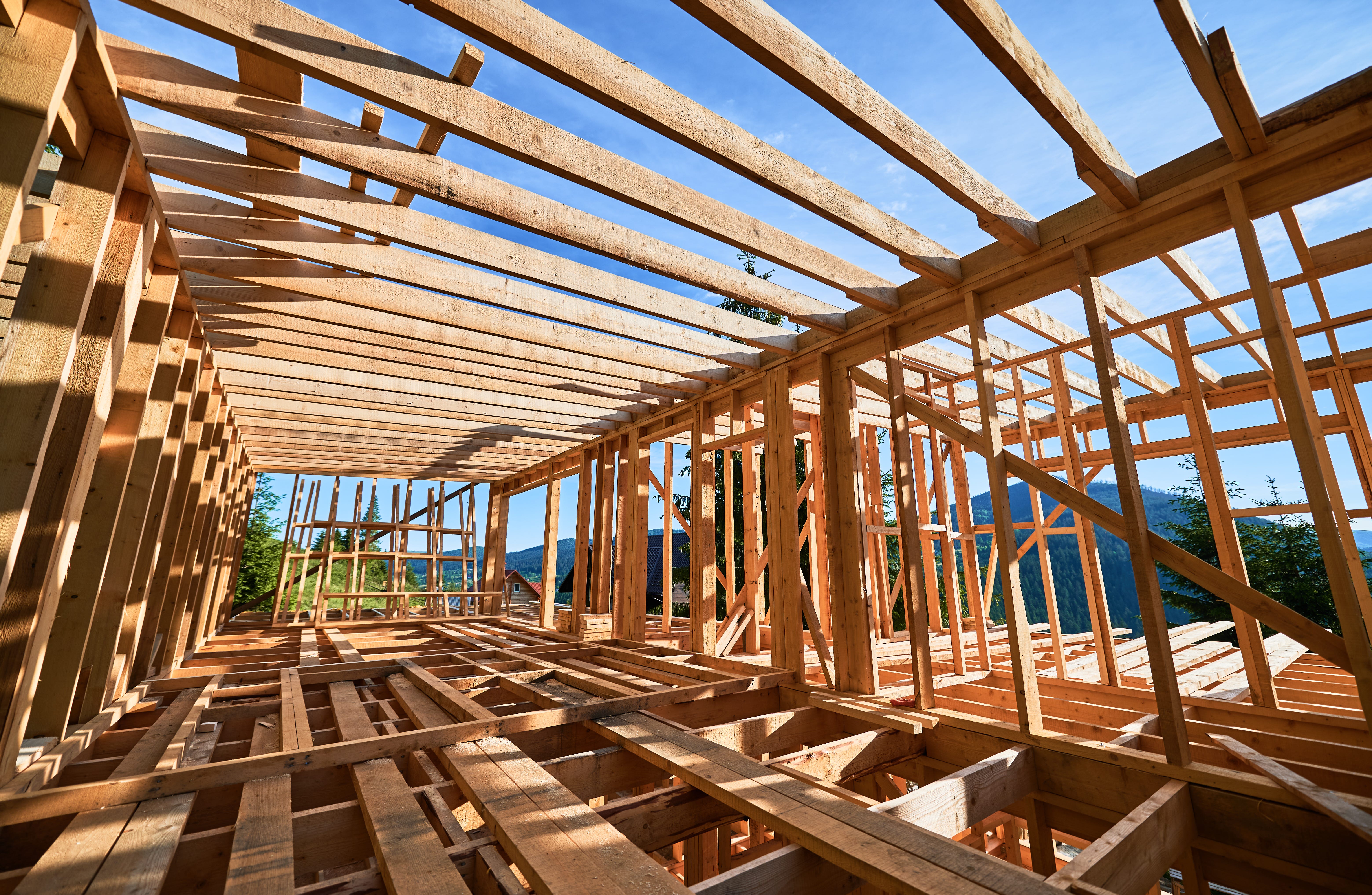
Washington imagines the economy as a box. You put money in one side and houses come out the other. The “market” is the box. Nobody’s quite sure what happens inside it, and nobody in charge thinks it’s their business to ask. The government stands to the side with only two possible moves to make, it can add a rule or take one away.
That’s the whole debate over housing. One side says take the rules away. Knock down the zoning, kill the reviews, let people build. The other side says put more money in. Subsidize the buyer, fund the voucher, finance the project. They sound like enemies, but they’re running the same machine. Both of them believe the box is full. Both believe that somewhere inside it sits all the lumber and steel and labor we could ever need, idling, waiting for the right signal.
They’re happy to think outside the box. They’ll think around it. They’ll spend whole careers twiddling the dials bolted to the front of it. The one thing they won’t do is open the lid and look inside, because the answer lives inside, and the answer frightens them.
The box is mostly empty. The steel mill that was supposed to fire up with rising prices was closed and scrapped forty years ago. The men who knew how to frame and wire and plumb a house, came up through an apprenticeship system we stopped paying for. The sawmills can’t add a shift fast enough to matter. We send the price signal in, loud as it’ll go, and the box has almost nothing to hand back. So the only thing that moves is the price.
The US just ran this experiment. From 2020 to 2022 we poured more money into housing than at any time in living memory. Stimulus, savings, mortgage rates near zero. If the box were full of productive capacity, those investments would have turned into housing inventory. But that’s not what happened.
Prices roughly doubled in the hot markets. Sales spiked. 2021 was the strongest year for home sales since 2006, but almost none of the growth turned into new houses. It was the same inventory changing hands for more money. We’ve been building roughly the same number of houses every year for forty years. When we poured money in during those two years, slightly more homes were started but fewer were finished, and per person we built less than half what we built in 1972.
The money didn’t become houses. It became profit. Then the Fed raised rates and the music stopped. Sales fell off a cliff to the lowest level since 1995, so the same houses aren’t changing hands at all.
The steel mill that was supposed to fire up with rising prices was closed and scrapped forty years ago. The men who knew how to frame and wire and plumb a house, came up through an apprenticeship system we stopped paying for. The sawmills can’t add a shift fast enough to matter. We send the price signal in, loud as it’ll go, and the box has almost nothing to hand back.
Ask where the money went and the honest answer is mostly nowhere. People sold high and bought high, they handed their gain right back across the closing table. It was musical chairs and when the music stopped, almost nobody got to keep their new price. Look at the Federal Reserve’s own books. Household home equity grew by something like fourteen trillion dollars over those years, and nearly all of it was paper, just prices rising on houses that already existed. Underneath the paper, families were losing real money through debt every single year. The wealth was a number on a statement, frozen in place, borrowed against, and houses never actually got built.
When the prices got too high, we used our only tool. The Fed raised interest rates. That move can’t lay a foundation. It can’t train a welder. It has no power to bring a single house into the world. All it can do is make borrowing hurt until people stop trying to buy. The problem was too little supply, and the one big lever we own can only destroy demand. They call it price stability. What it really is, is making people poorer until they stop wanting the thing we failed to build. That’s bringing a weedeater to trim a bonsai. The tool isn’t weak. It’s the wrong tool, swung at something that needed a careful hand, and the careful tools got thrown out years ago.
The New York Times ran a recent guest opinion piece about a development in Vancouver called Senakw. The Squamish Nation got its land back, land that sits outside the city’s rules, and they’re building eleven towers and six thousand homes at a density the city would never have allowed. The Times held it up as the lesson: the only thing preventing us from building, it says, is us. Cut the rules, beat the neighbors, and the housing comes. It’s a good story, and the piece is half right, though it quietly concedes its own punchline, calling Senakw a “modest dent” in a city that needs eighty-three thousand homes by 2033.
The modest dent is the tell. The one building freed from every rule is a rounding error against the need, and it still had to be built out of the same lumber and steel and labor everybody else is fighting over. The rule was never the only thing in the way. The piece even reaches for the right yardstick, sizing the crisis in years of a worker’s pay, the oldest honest measure there is, and then lays the whole thing at the feet of the zoning board.
There are places who’ve already tried the rule-cutters’ theory, and they tell the rest of the story. Tennessee doesn’t strangle builders with reviews. Neither does Texas. They’re loose, they’re cheap by coastal standards, and they are still not building their way back to 1950 levels. But their prices are climbing anyway. If rules were the only problem, the light-regulation states would be outpacing everyone else. They aren’t. Even the Times piece admits that without quite meaning to: home-building in the loose Sun Belt all but shut down after 2008 and never came back. By 2025, the number of homes started reached barely three-quarters of the pre-crash pace. They had the permission but they didn’t have the capacity. The rules are a wall, but not the wall that stops you.
When the prices got too high, we used our only tool. The Fed raised interest rates. That move can’t lay a foundation. It can’t train a welder. It has no power to bring a single house into the world. All it can do is make borrowing hurt until people stop trying to buy.
You hit that wall the moment you get serious about building ten million homes. You run out of people who know how to build, because the trades are a finite pool and you can’t conjure a framing crew out of a press release. You run out of the materials houses are made of. The lumber, the steel, the concrete, the wiring, the breakers, the transformers. If you try to build everything at once, the commodity markets take a cut and the cost of every input climbs, the same way it did during Covid when you couldn’t get a sheet of plywood at any price. This stuff has to come from a physical place. It’s not sitting in unlimited supply at the back of a Home Depot.
We import a big share of our housing materials, including roughly a third of our lumber, which mostly comes from from Canada. China pours about twenty times the cement we do. A transformer can take a year to show up. After thirty years of buying the world’s stuff instead of making our own, because it’s cheaper, that’s what’s left of our production base.
And here’s the part that should stop both sides cold: the workers we still have build less than they used to. Construction is the one corner of the American economy that went backwards. Almost every other field got more productive (farming, manufacturing, shipping), but a construction worker today puts up less than a worker did in 1970. Value added per worker is down something like forty percent over fifty years.
Sit with how strange that is. The tools got better (nail guns, prefab trusses, tower cranes, a full model of the house before a shovel hits dirt) and we got slower anyway. It didn’t happen by accident. We cut the apprenticeships that used to turn a kid into a journeyman. The share of construction workers in a union fell, from around forty percent in the seventies, to about one in nine today. We chopped the contractor, who could carry a bench of skilled crews between booms, into a chain of subcontractors racing each other to the bottom. The knowledge of how to build well, fast, and at scale is not a file you can download. It lives in people. It passes hand to hand, and we spent forty years letting it walk out the door.
We used to keep other tools in the shed. The TVA was the government building dams and power plants and stringing line and electrifying a poor region the market had skipped. The Defense Plant Corporation was the government building factories, hundreds of them, owning them, running war production at a tempo no private firm would have risked. The Reconstruction Finance Corporation put public money and public ownership to work building real things. We did this. It wasn’t a theory. We won a war with it and lit up the South with it.
We built houses with it, too. After the war, using government mortgages and the materials those same war plants left behind, the country put up homes at a pace we have never matched since. A new home finished every sixteen minutes. And then we forgot that option was ever on the table.
That’s what public ownership is for. Not a slogan, a tool. A national capacity to mine and mill and build that can be told what to do, not a market that’s coaxed into maybe building if the quarter looks good. A public builder can keep crews and a transformer line ready for a mission and stand them down when the mission’s done, and it won’t go bankrupt for adjusting, because it doesn’t answer to quarterly returns. The private builder can’t carry that idle capacity. It would be malpractice for him to try. So the surge capacity this country needs to house its people will not come out of the box no matter how we set the dials, because nobody inside the box is paid to hold it.
We just crowned the world’s first trillionaire off the back of public research and public contracts, and the same week we were told the public can’t build a thing. The capacity that floated Musk’s fortune is the capacity we’re not allowed to use for ourselves, to house a nurse or wire a town or lay a mile of rail. We have it backwards. The state to is allowed to be used as ground for a private fortune to grow on, and forbidden from growing necessities for the rest of us.
That’s where housing isn’t just about housing. A country that can float private fortunes bigger than most countries, and in the same breath can’t build affordable homes for working peole, has broken the link between what the public puts in and what the public gets back. The people pay in, and a few private hands take out. The accounting runs upside down. We feel it even when we can’t name it, and when people feel the deal is rigged, they stop believing that the system answers to them. So there’s a democracy problem when there’s a housing problem. They’re same problem in different coats.
We’ve accepted the housing market’s black box and dials like they’re laws of nature, the way things are meant to be. We’ve forgotten we can work to change how destiny unfolds for ourselves and for our nation and for the planet. We’re not just leaves in the wind. We’re people with agency and choices. We can choose to build a better country and a better planet, or we can choose to keep putting faith in the market like it’s God and just hoping it will be a righteous God.
The moral arc of history doesn’t bend on its own. It’s bent through will and effort. We don’t need faith, we need lumber. And apprenticeships and a public builder. We lost those things but we can build them back. Let’s open the machine and see what’s actually inside, because that’s the only way houses will ever come out the other end.
Corbin, you wrote all that good stuff about housing supply and you didn't write a word about the land market.
Here's the thing. Lumber, cement, bricks - all commodities. Land isn't a commodity. Land is the value of your development minus the cost of building it. Oh and you pay for land up front.
Why does that matter?
Because it means you can't cut prices to find more sales. If you did, you wouldn't be able to afford the land.
Prices are so high that only a few can afford them but the land market prevents them from cutting prices to what buyers can afford.
Busting the land market would look different in the US than it does here in the UK but that's the key
Put it another way, home building is a manufacturing business strapped to the side of a speculative one. Knock the speculation out and the manufacturing side can do what consumer goods do - cut prices and drive up quality
In essence, we need a third category beyond for-profit and non-profit: for public profit. Public investment should pay back profits to the public, not be handed over to the Epstein class on gold-plated platters. While I think there is value in a great many areas of endeavor (e.g. NASA), priority must be given to building the things the public needs *right fucking now*: housing, healthcare, safe drinking water, and... dare I say it...? the "defense" industry. Make defense contractors all non-profit (or public profit), and see if we don't have fewer armed conflicts around the entire globe. And some things should NEVER make a profit of any kind, like prisons. They go on the negative side of the government budget balance sheet, and for good reason. If you want to cut those costs, maybe stop incarcerating the largest percentage of your own people of any country in the world? Great piece Corbin!